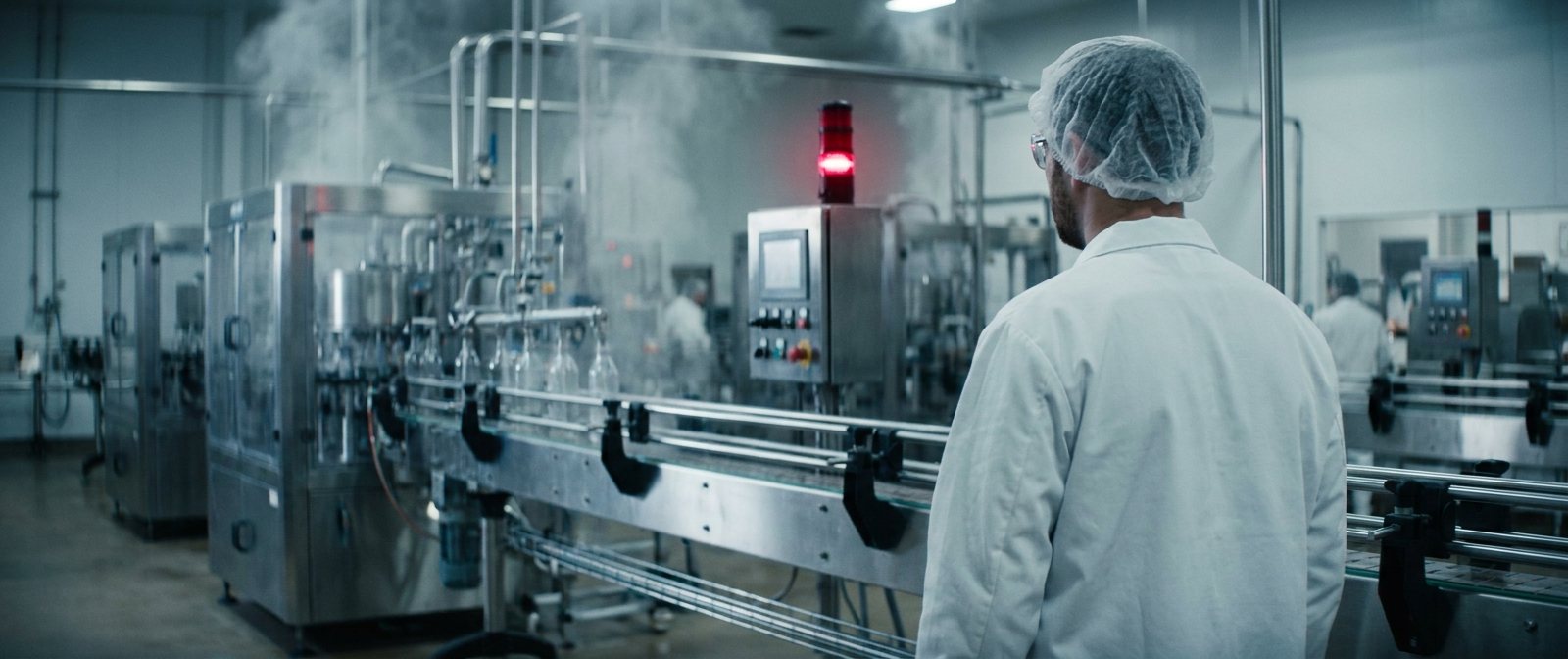
A typical case, not a client
This study does not describe any real clients and does not report any results obtained from a client: our confidentiality commitments prohibit this. It sets out explicit working hypotheses, then derives orders of magnitude through calculations that you can replicate line by line. During a diagnosis, your figures replace ours.
The modelled situation
Morocco, with its agricultural diversity, has considerable potential to develop its food sector. Companies must navigate a complex environment marked by consumer expectations regarding quality, traceability, and sustainability. Furthermore, competition is intensifying with the arrival of new players and the increase in imports. Companies must also face challenges related to regulation, resource management, and technological innovation. In this context, you must adopt a proactive approach to adapt to market changes and meet consumer demands.
| Initial hypothesis | Value | Unit |
|---|---|---|
| Product lots per day | 38 | batches |
| Production days per year | 250 | days |
| Rate of blocked or returned batches | 3,5 | % |
| One release control for every N units | 4 | batches |
Result, line by line
This case study highlights the strategic challenges of the food industry in Morocco. Companies must be aware of the challenges related to regulatory compliance, resource management, and innovation. By adopting a proactive approach, they can not only comply with market requirements but also stand out with quality products. Implementing the proposed recommendations will enable companies to enhance their competitiveness and meet the growing expectations of consumers. You must remain attentive to market developments and adjust strategies accordingly.
| Calculated magnitude | Formula | Result | Unit |
|---|---|---|---|
| Volume processed per year | 38 per day × 250 days | 9 500 | units/year |
| Discrepancies observed | 9 500 × 3,5 % | 332,5 | discrepancies/year |
| Controls to be carried out on the sampling plan | 9 500 ÷ 4 | 2 375 | controls/year |
| Proportion of the flow actually controlled | 1 ÷ 4 × 100 | 25 | % of flow |
What we measure first
Regulatory compliance
Companies must ensure compliance with current standards, particularly regarding food safety and labelling, to avoid sanctions and preserve their reputation.
Resource management
Optimizing the use of resources, whether human, material or financial, improves profitability and reduces costs.
Product innovation
Developing new products that meet consumption trends, such as organic or allergen-free foods, attracts health-conscious customers.
Distribution and logistics
Establishing an effective supply chain ensures product freshness and a quick response to market demands.
How the mission unfolds
Strengthening compliance
Implement regular audits to ensure compliance with standards and train staff on regulatory requirements.
Process optimisation
Analyse internal processes to identify inefficiencies and implement suitable solutions.
New product development
Invest in research and development to create innovative products, taking into account consumer expectations.
Improvement of the supply chain
Evaluate logistics partners and consider collaborations to optimise distribution and reduce lead times.
Communication strategy
Develop a communication plan to enhance product value and strengthen brand awareness in the market.
The indicators implemented
Identified during the diagnosis and monitored throughout the mission: these are what make the result demonstrable, not just declarative.
- Rate of blocked batches and reason for blocking
- Results of release analyses
- Response time in the event of a simulated recall
- Critical control point (CCP) compliance rate
- Customer complaints per million units delivered
What causes this type of project to fail
Non-compliance with standards+
Lack of innovation+
Ineffective supply chain+
Inadequate communication+
What is being asked of us
How to improve regulatory compliance in the food industry?+
What are the best practices for innovating in product development?+
How to optimise the supply chain?+
Why is it important to have a communication strategy?+
Let's redo this calculation with your figures
The diagnosis replaces each hypothesis with data collected from you. It lasts half a day and does not commit you to anything.
Request a diagnosis