A typical case, not a client
This study does not describe any real clients and does not report any results obtained from a client: our confidentiality commitments prohibit this. It sets out explicit working hypotheses, then derives orders of magnitude through calculations that you can replicate line by line. During a diagnosis, your figures replace ours.
The modelled situation
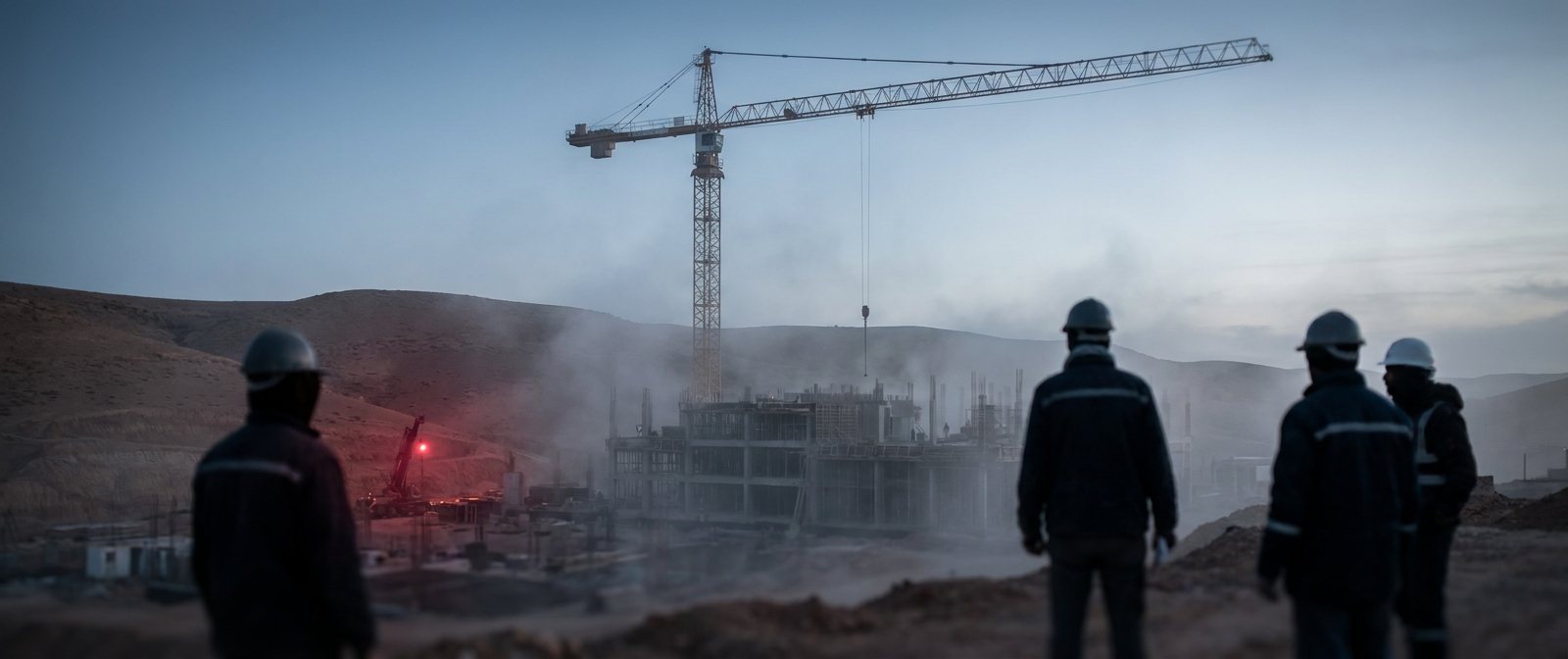
The BTP and infrastructure sector in Morocco is characterised by strong demand due to rapid urbanisation and state-initiated development projects. Major infrastructures, such as roads, bridges, and public buildings, are at the heart of sector stakeholders' concerns. However, companies face challenges such as increased competition, cost management, and compliance with environmental standards. Furthermore, technological innovation and the integration of sustainable practices are becoming key factors for standing out in the market. Companies must also adapt to the growing demands of customers regarding quality and timelines. The above assumptions allow for the evaluation of opportunities and threats facing the sector.
| Initial hypothesis | Value | Unit |
|---|---|---|
| Annual turnover | 120 000 000 | MAD |
| Site workforce | 220 | people |
| Percentage of revenue lost to reworks and defects | 4 | % du CA |
| Treatable share over twelve months | 35 | % |
Result, line by line
Understanding the dynamics of the construction and infrastructure sector determines any company's ability to thrive in Morocco. Challenges related to competition, environmental standards and cost management must be addressed proactively. By adopting a strategy focused on innovation and differentiation, companies can not only position themselves favorably in the market, but also meet growing customer expectations. The above assumptions, along with the proposed recommendations, will serve as a guide to navigate this complex and constantly evolving environment.
| Calculated magnitude | Formula | Result | Unit |
|---|---|---|---|
| Annual cost of non-quality | 120 000 000 × 4,0 % | 4 800 000 | MAD/year |
| Treatable share in twelve months | 4 800 000 × 35 % | 1 680 000 | MAD/year |
| Equivalent per person | 1 680 000 ÷ 220 | 7 636,4 | MAD/person |
| Target rate after initiative | 4,0 % − (4,0 % × 35 %) | 2,6 | % du CA |
What we measure first
Increased competition
The market is saturated with numerous players, making differentiation difficult.
Environmental standards
Companies must adapt to new sustainability regulations.
Cost management
Pressure on margins necessitates optimisation of resources and processes.
Technological innovation
The integration of new technologies improves efficiency and quality.
How the mission unfolds
Market Analysis
Conduct a thorough study of trends and opportunities in the sector.
Differentiation strategy
Develop a unique value proposition based on quality and innovation.
Cost optimisation
Implement processes to reduce costs without compromising quality.
Training and development
Invest in employee training to foster innovation and sustainability.
Strategic partnerships
Establish collaborations with key players to strengthen market position.
The indicators implemented
Identified during the diagnosis and monitored throughout the mission: these are what make the result demonstrable, not just declarative.
- Number of accidents and frequency rate, by site
- Cost of reworks and defects, recorded by site
- Adherence rate to planning milestones
- Compliance rate of material receptions
- Number of reservations at delivery and lifting time
What causes this type of project to fail
Lack of innovation+
Regulatory non-compliance+
Poor cost management+
Lack of training+
What is being asked of us
What are the main challenges in the construction sector in Morocco?+
How to differentiate in the market?+
Why is innovation important?+
What are the best practices for optimising costs?+
Let's redo this calculation with your figures
The diagnosis replaces each hypothesis with data collected from you. It lasts half a day and does not commit you to anything.
Request a diagnosis