A typical case, not a client
This study does not describe any real clients and does not report any results obtained from a client: our confidentiality commitments prohibit this. It sets out explicit working hypotheses, then derives orders of magnitude through calculations that you can replicate line by line. During a diagnosis, your figures replace ours.
The modelled situation
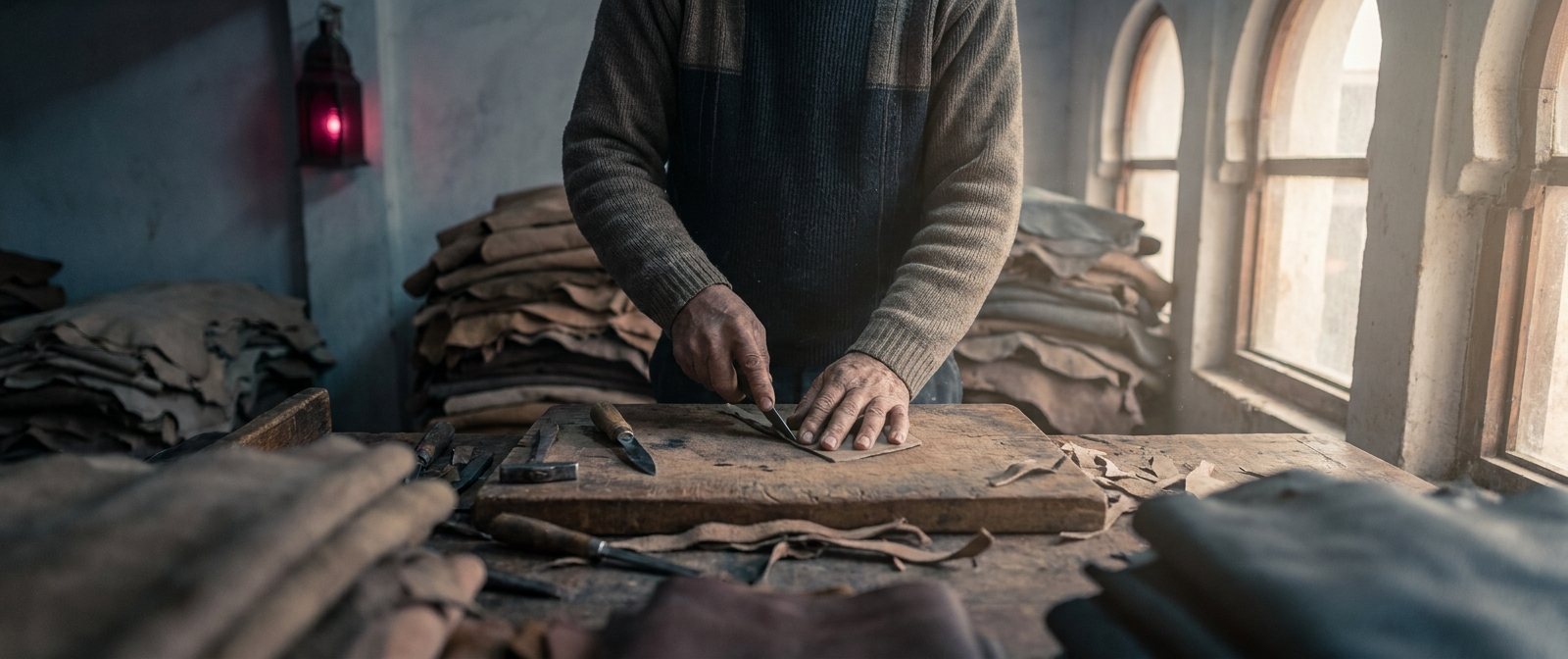
Morocco's leather and footwear sector is characterised by a rich craft tradition, with skilled artisans who maintain ancestral techniques. However, the sector faces contemporary challenges such as increased competition from imported products, fluctuations in raw material prices and growing sustainability requirements. Companies must also adapt to new consumer expectations, with increasing preference for ethical and environmentally responsible products. In this context, it requires companies to strengthen their market position by adopting innovative strategies and improving their operational efficiency.
| Initial hypothesis | Value | Unit |
|---|---|---|
| Annual turnover | 45 000 000 | MAD |
| Production workforce | 180 | people |
| Material waste and alteration rate | 5,5 | % du CA |
| Treatable share over twelve months | 35 | % |
Result, line by line
This sector case study provides an overview of the challenges and opportunities in the leather and footwear sector in Morocco. By relying on precise diagnostics, it proposes a concrete action plan to help companies navigate a constantly evolving environment. The recommendations provided aim to strengthen the competitiveness of companies, meet consumer expectations, and integrate sustainable practices. By adopting these strategies, companies can not only improve their performance but also contribute to the enhancement of Moroccan craftsmanship in the international market.
| Calculated magnitude | Formula | Result | Unit |
|---|---|---|---|
| Annual cost of non-quality | 45 000 000 × 5,5 % | 2 475 000 | MAD/year |
| Treatable share in twelve months | 2 475 000 × 35 % | 866 250 | MAD/year |
| Equivalent per person | 866 250 ÷ 180 | 4 812,5 | MAD/person |
| Target rate after initiative | 5,5 % − (5,5 % × 35 %) | 3,6 | % du CA |
What we measure first
Increased competition
Local companies must face intense competition from imported products, often at lower prices.
Fluctuation of raw materials
Variations in raw material costs directly impact the profitability of companies.
Consumer expectations
Consumers are increasingly seeking sustainable and ethical products, necessitating an adaptation of offerings.
Technological innovation
The sector must integrate new technologies to improve productivity and product quality.
How the mission unfolds
Market Analysis
Conduct a thorough market study to identify trends and opportunities.
Process improvement
Implement more efficient production methods to reduce costs and improve quality.
Sustainable development
Adopt environmentally friendly practices to meet consumer expectations.
Marketing strategies
Develop targeted marketing campaigns to promote local and artisanal products.
Training and development
Invest in employee training to enhance skills and innovation within teams.
The indicators implemented
Identified during the diagnosis and monitored throughout the mission: these are what make the result demonstrable, not just declarative.
- Rejection rate by stage (cutting, piercing, assembly)
- Material yield per hide
- Compliance rate with chemical requirements of clients
- On-time delivery rate
- Number of alterations per pair produced
What causes this type of project to fail
Lack of innovation+
Absence of marketing strategy+
Non-compliance with environmental standards+
Insufficient training+
What is being asked of us
How can the sector modernise?+
What are the major challenges to overcome?+
How to attract young people to this sector?+
What is the importance of sustainability?+
Let's redo this calculation with your figures
The diagnosis replaces each hypothesis with data collected from you. It lasts half a day and does not commit you to anything.
Request a diagnosis