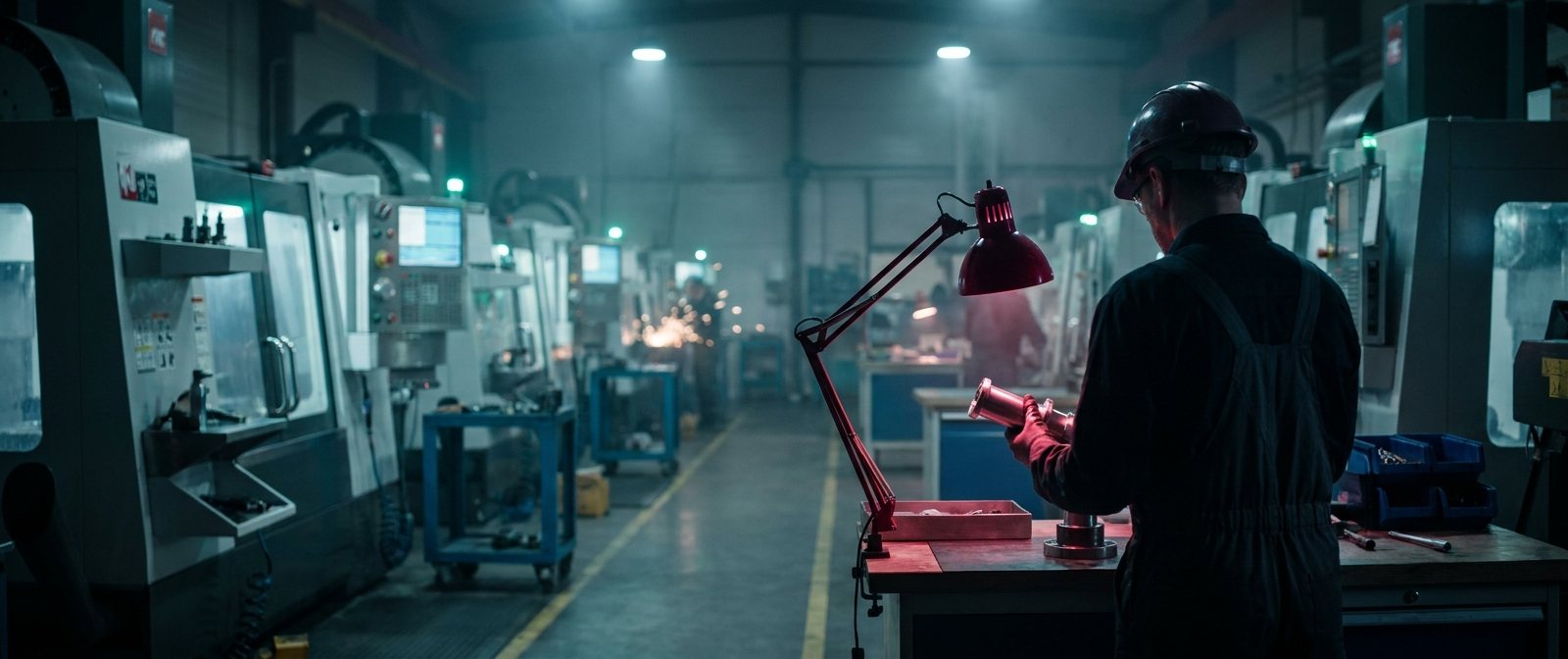
A typical case, not a client
This study does not describe any real clients and does not report any results obtained from a client: our confidentiality commitments prohibit this. It sets out explicit working hypotheses, then derives orders of magnitude through calculations that you can replicate line by line. During a diagnosis, your figures replace ours.
The modelled situation
The Moroccan industrial sector is undergoing a transformation, supported by government initiatives aimed at enhancing the country's attractiveness for foreign investment. Companies must navigate an environment marked by increased competition, both nationally and internationally. Challenges include optimising production processes, adopting advanced technologies, and managing human resources. Furthermore, the transition to more sustainable and environmentally friendly practices has become a priority for many companies. The above assumptions help to better understand the dynamics at play and anticipate future developments in the sector.
| Initial hypothesis | Value | Unit |
|---|---|---|
| Annual turnover | 70 000 000 | MAD |
| Production workforce | 110 | people |
| Scrap and rework rates | 4,2 | % du CA |
| Treatable share over twelve months | 40 | % |
Result, line by line
The analysis of the industrial and manufacturing sector in Morocco reveals significant opportunities, but also important challenges. Companies must adopt a proactive approach to navigate this complex landscape. By implementing strategies focused on process optimisation, innovation, sustainability, and human resource development, they can not only improve their performance but also contribute to the country's economic growth. The above assumptions provide a framework to guide strategic decisions and future investments.
| Calculated magnitude | Formula | Result | Unit |
|---|---|---|---|
| Annual cost of non-quality | 70 000 000 × 4,2 % | 2 940 000 | MAD/year |
| Treatable share in twelve months | 2 940 000 × 40 % | 1 176 000 | MAD/year |
| Equivalent per person | 1 176 000 ÷ 110 | 10 690,9 | MAD/person |
| Target rate after initiative | 4,2 % − (4,2 % × 40 %) | 2,5 | % du CA |
What we measure first
Competitiveness
Companies must improve their operational efficiency to remain competitive against international players.
Innovation
The lack of innovation in processes and products limits companies' ability to differentiate themselves in the market.
Sustainability
The absence of clear sustainability strategies can harm companies' reputations and regulatory compliance.
Human resources training
Continuous employee training enables them to adapt to new technologies and working methods.
How the mission unfolds
Process improvement
Implement lean methodologies to optimise production and reduce costs.
Investment in R&D
Encourage innovation through targeted investments in research and development of new products.
Sustainability strategies
Develop eco-friendly initiatives to meet the growing expectations of consumers and regulators.
Training and development
Develop tailored training programmes to enhance employee skills and improve productivity.
Strategic partnerships
Establish collaborations with other companies and institutions to share resources and knowledge.
The indicators implemented
Identified during the diagnosis and monitored throughout the mission: these are what make the result demonstrable, not just declarative.
- Scrap rate by line and by reference
- Synthetic equipment yield rate
- Changeover time on bottlenecks
- Cost of rework reported each month
- Customer service rate and delivery delays
What causes this type of project to fail
Lack of innovation+
Skills mismatch+
Non-compliance with environmental standards+
Lack of clear strategy+
What is being asked of us
How can I improve my company's competitiveness?+
What are the best practices for sustainability?+
How can I effectively train my employees?+
What strategic partnerships should I consider?+
Let's redo this calculation with your figures
The diagnosis replaces each hypothesis with data collected from you. It lasts half a day and does not commit you to anything.
Request a diagnosis