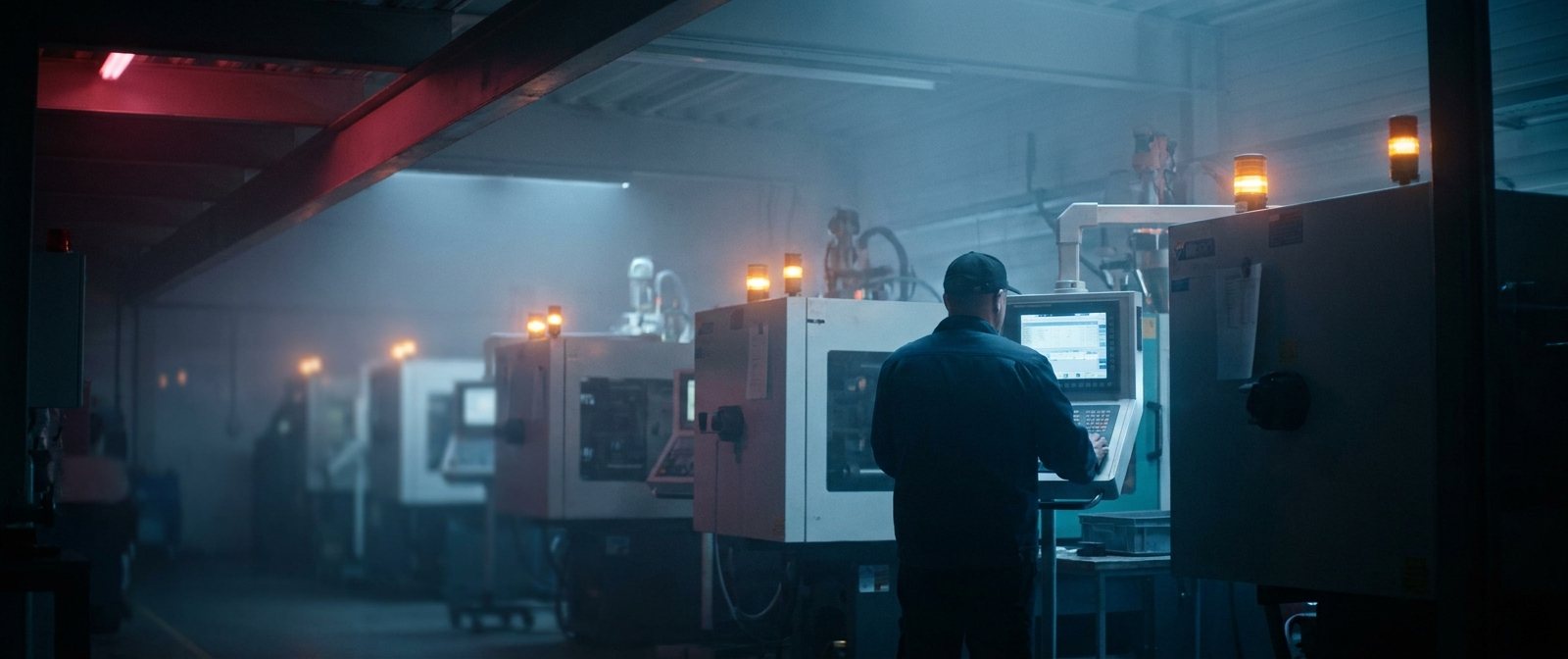
A typical case, not a client
This study does not describe any real clients and does not report any results obtained from a client: our confidentiality commitments prohibit this. It sets out explicit working hypotheses, then derives orders of magnitude through calculations that you can replicate line by line. During a diagnosis, your figures replace ours.
The modelled situation
The plastics and packaging sector in Morocco is undergoing transformation, influenced by factors such as increasing regulation on plastic materials, pressure to reduce environmental impact, and the rise of e-commerce. Companies must navigate the need to optimise their production processes while responding to the growing demand for sustainable packaging solutions. Furthermore, international competition necessitates a constant reevaluation of business strategies. Sector players must also consider fluctuations in raw material costs and consumer expectations that increasingly favour environmentally friendly products. In this context, companies must develop innovative approaches to remain competitive while meeting regulatory requirements.
| Initial hypothesis | Value | Unit |
|---|---|---|
| Annual turnover | 55 000 000 | MAD |
| Production workforce | 95 | people |
| Material waste and alteration rate | 5 | % du CA |
| Treatable share over twelve months | 40 | % |
Result, line by line
The plastics and packaging industry in Morocco faces significant challenges, particularly the need to comply with increasingly strict regulations and meet growing consumer expectations regarding sustainability. Companies must adopt a proactive approach by investing in research and development, optimising their production processes and training their teams. Strategic partnerships can also support the success of these initiatives. By integrating these elements into their strategy, companies in the sector can improve their competitiveness whilst contributing to a more sustainable future for the industry.
| Calculated magnitude | Formula | Result | Unit |
|---|---|---|---|
| Annual cost of non-quality | 55 000 000 × 5,0 % | 2 750 000 | MAD/year |
| Treatable share in twelve months | 2 750 000 × 40 % | 1 100 000 | MAD/year |
| Equivalent per person | 1 100 000 ÷ 95 | 11 578,9 | MAD/person |
| Target rate after initiative | 5,0 % − (5,0 % × 40 %) | 3 | % du CA |
What we measure first
Environmental regulation
Companies must comply with increasingly strict standards regarding the use of plastics and waste management.
Technological innovation
Integrating new technologies into the production process improves efficiency and reduces costs.
Increased competition
The presence of international competitors puts pressure on product prices and quality.
Evolution of consumer expectations
Customers are seeking sustainable and innovative packaging solutions, necessitating an adaptation of offerings.
How the mission unfolds
Strengthening R&D
Invest in research and development to create more sustainable and innovative packaging materials.
Team training
Implement training programmes to raise employee awareness of environmental issues and new technologies.
Strategic partnerships
Establish collaborations with key industry players to share knowledge and resources.
Process optimisation
Reassess and improve production processes to reduce waste and costs.
Transparent communication
Develop a communication strategy to inform customers about sustainable initiatives and innovations.
The indicators implemented
Identified during the diagnosis and monitored throughout the mission: these are what make the result demonstrable, not just declarative.
- Rejection rate per press and per reference
- Material yield and internal recycling rate
- Compliance rate with food contact requirements
- Mould changeover time
- Customer complaint rate per delivered batch
What causes this type of project to fail
Lack of regulatory anticipation+
Inadequacy of products+
Lack of innovation+
Ineffective communication+
What is being asked of us
How can companies comply with new regulations?+
What are the benefits of innovation in the sector?+
How to establish strategic partnerships?+
What are the current trends in sustainable packaging?+
Let's redo this calculation with your figures
The diagnosis replaces each hypothesis with data collected from you. It lasts half a day and does not commit you to anything.
Request a diagnosis